
Genetics and hormones
Gradual thinning at the crown, parting or temples can have a genetic or hormonal cause.
Often develops graduallyOpen 24 Hours • 7 Days a Week
Hair treatment
Finding more hair on your pillow or a wider parting can be unsettling. Before you try another oil, shampoo or supplement, it helps to know why your hair is falling. Hair loss has many causes, and the right approach for one person can be useless for another.
At Sayra Hospital & Piles Centre, hair services begin with understanding, not selling. This page explains the available services, who they may suit and what to keep in mind.
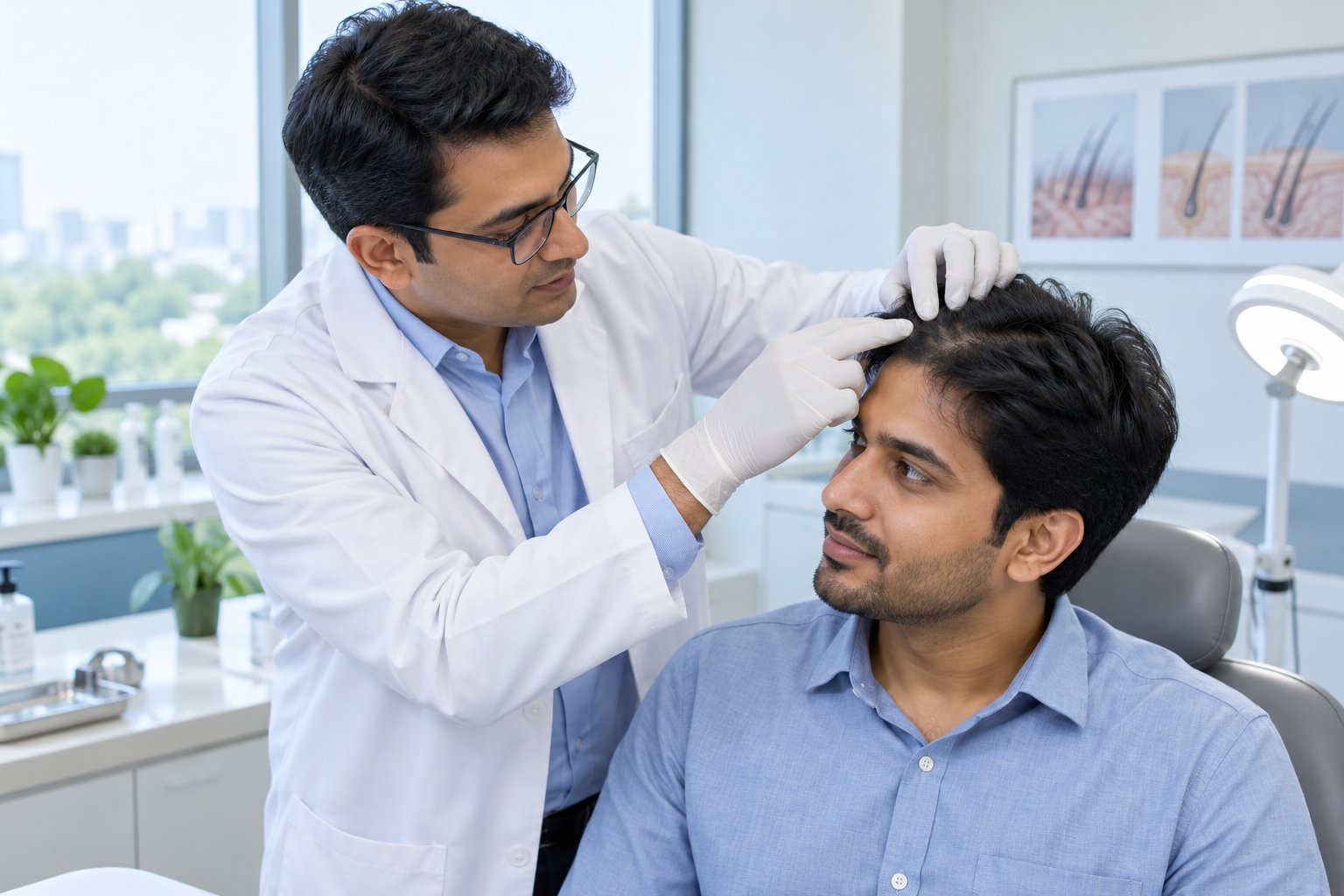 Illustrative image
Understand the pattern
Hair loss can have more than one cause. These common factors are a starting point for a proper assessment, not a diagnosis.
Gradual thinning at the crown, parting or temples can have a genetic or hormonal cause.
Often develops graduallyNutritional gaps or thyroid problems can contribute to general shedding over weeks or months.
May need medical reviewStress, illness, medicines and scalp conditions can each affect hair growth in different ways.
Timing can offer cluesCare matched to your needs
Your doctor can explain which options may suit your hair and scalp after an assessment.
A doctor reviews your history, diet, medicines, family pattern and scalp to understand what may be behind your hair loss. Knowing the cause helps avoid spending on treatments that may not help.
A close examination of hair density, thickness and scalp condition can help guide treatment and track progress over time.
A small sample of your own blood is processed to concentrate platelets, and the concentrate is applied to the scalp. It is used in selected patients to support hair thickness. Several sessions are commonly planned, results vary, and it does not suit everyone.
GFC is a related preparation made from your own blood and may be discussed alongside PRP. Your doctor can explain how it differs and whether it fits your case.
A transplant moves hair follicles from a donor area to thinning or bald areas. It may be considered for stable, long-term hair loss. Suitability, technique and realistic expectations need to be discussed with the treating doctor.
This service is for unwanted facial or body hair and is different from scalp hair loss treatment. Suitability depends on hair colour and skin tone. Results are a reduction over several sessions, not a guarantee of complete removal.
A clear, unhurried visit
Understand the concern first, then decide on a plan with your doctor.
How long it has been happening, how quickly, and what you have tried.
Your scalp and hair pattern, and tests if needed.
What may help, what may not, and what to expect.
You choose, and follow-up is explained.
Common questions
General answers to help you prepare for a conversation with your doctor.
It depends on the cause. Some shedding recovers once the cause is corrected, while some patterns, such as genetic baldness, usually need ongoing management.
It is usually considered for adults with stable hair loss and enough donor hair. A doctor will assess suitability.
No. Response varies, and repeat sessions are commonly planned for selected patients.
Both use preparations from your own blood. Your doctor can explain the difference for your case.
Call us to confirm which doctor and branch can see you for hair concerns.
Start with a conversation
Whether it is thinning, shedding or a receding hairline, the first step is understanding the cause.